What Is an NVOCC (Non-Vessel Operating Common Carrier)?
Ocean Freight · 3 min read
An NVOCC is an ocean carrier that transports goods under its own House Bill of Lading — or equivalent documentation — without operating ocean-going vessels.
How Does an NVOCC Work?
- It leases vessel space from a VOCC (Vessel Operating Common Carrier) and sells that space to its own customers.
- An NVOCC can be described as a shipper to carriers and a carrier to shippers — a dual role.
- NVOCCs usually do not own warehouses, but many own their own fleet of containers.
- In certain circumstances, an NVOCC may also operate as a freight forwarder.
VOCC vs. NVOCC
- VOCC: owns and operates vessels, issues the Master Bill of Lading.
- NVOCC: buys capacity through volume contracts or space chartering and issues its own House B/L to shippers.
- On the Master B/L, the NVOCC typically appears as the shipper.
How Is It Different from a Freight Forwarder?
- A traditional forwarder acts as an agent; an NVOCC acts as the carrier and takes responsibility for carriage.
- Many companies hold both roles and can serve customers under either capacity.
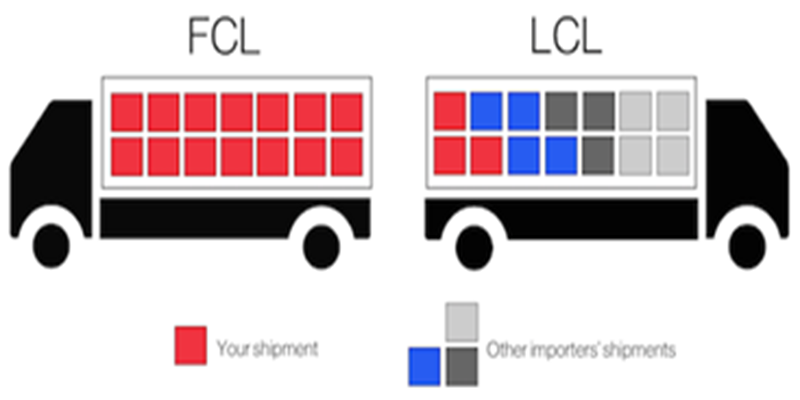
- LCL consolidations are typically run by NVOCCs: multiple shipments share one container, and each shipper receives its own House B/L.
Why it matters: NVOCCs secure space and rates through volume commitments — often stronger protection in peak season. Verify your partner's NVOCC qualification when booking.
Further Reading
Back to Knowledge